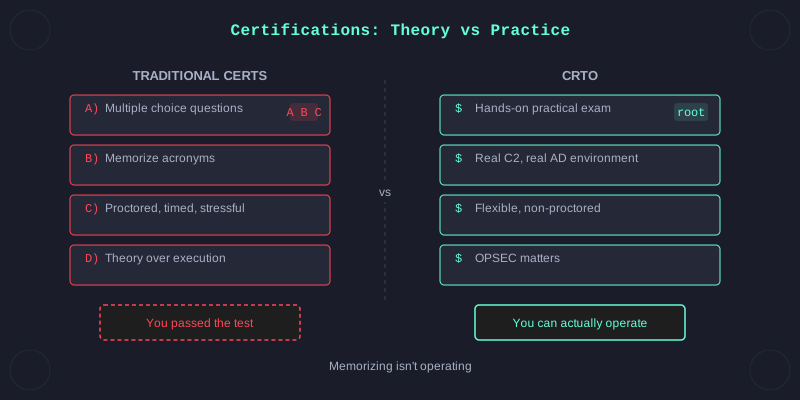
Most cybersecurity certifications test how well you memorize. CRTO tests how well you operate.
I took the Certified Red Team Operator from Zero Point Security not because I needed to learn the material from scratch. I already work with most of these techniques in real engagements. But going through a structured course forces you to revisit fundamentals you might be skipping over in practice, and it gives you a shared framework when bringing junior operators up to speed.
The course is built by Daniel Duggan (RastaMouse) and structured around Cobalt Strike as the primary C2 framework. Most courses teach you tools in isolation. This one teaches a full attack lifecycle using the same tooling that real red teams use in actual engagements. That matters.
The material goes from initial access all the way to domain dominance. Payload delivery, lateral movement, privilege escalation, persistence, Kerberos abuse, ADCS exploitation, forest trust attacks, pivoting. Each topic goes deep enough that you understand not just the commands but why they work. Even with experience, I found myself picking up details I'd glossed over in day-to-day operations.
The course doesn't pretend to be beginner-friendly either. You need a solid understanding of Windows, Active Directory and networking before jumping in. If you've never touched a command line or don't know what a domain controller is, start somewhere else first. But if you have a baseline and want to learn how to compromise an enterprise environment end to end, it delivers.
The lab environment is where everything clicks. A full AD setup with multiple domains and forests to practice every technique from the course. Not a CTF with artificial flags. A realistic corporate network with workstations, servers, domain controllers and trust relationships that mirror what you'd see in a real engagement. I spent a good amount of time in the labs just to solidify techniques I already use. That time is never wasted.
What separates CRTO from other certs is the practical focus. No multiple choice. No memorizing acronyms. You get dropped into an environment and you either know how to operate or you don't. Compared to CEH, which is mostly theory and exam questions, the difference is massive. CRTO forces you to actually do the work.
The exam format is one of the things I liked most. You get 24 hours of active time spread across a 7-day window, and you can pause whenever you need to. Non-proctored. No report to write afterwards. One objective, and OPSEC matters. If you get detected, it costs you. That's closer to how real red team work actually goes than any 48-hour sprint with a camera watching you type.
People always ask how it compares to OSCP. Different focus. OSCP is broader and covers web, Linux, Windows and network exploitation. CRTO is laser-focused on Active Directory and Cobalt Strike. They complement each other more than they compete. If someone asked me which one to pick for getting into red teaming specifically, CRTO.
If you're preparing, some tips:
Take notes in your own words as you go through the material. Don't copy-paste slides. When you're under pressure and need to remember how constrained delegation works, your own notes will save you.
Spend serious time in the labs. Don't just follow the course steps. Try things on your own. Break stuff. Reset and do it again. The more comfortable you are with the tooling, the less you'll struggle when it counts.
Get familiar with Cobalt Strike beyond the basics. How the beacon works, session management, chaining techniques together. The course covers this, but extra time here pays off.
Don't rush the material. There's a lot of content and it builds on itself. Skipping ahead because you think you already know something usually means missing a detail that bites you later.
If you're coming from web security, expect the shift to take time. AD is a different world. Different concepts, different tools, different methodology. But that's exactly why it's worth doing.
CRTO is one of the best practical certifications in offensive security right now. Whether you're looking to get into red teaming or want to revisit the fundamentals with structure, this is the one. The skills transfer directly to real engagements.
Worth every hour.
