Finding vulnerabilities is half the job. Getting them fixed is the other half.
Technical expertise matters. Obviously. But if you want to actually make an impact, you need to know your audience and speak their language.
Unless you're working in a purely technical role with zero business communication, this applies to you.
Let me break it down:
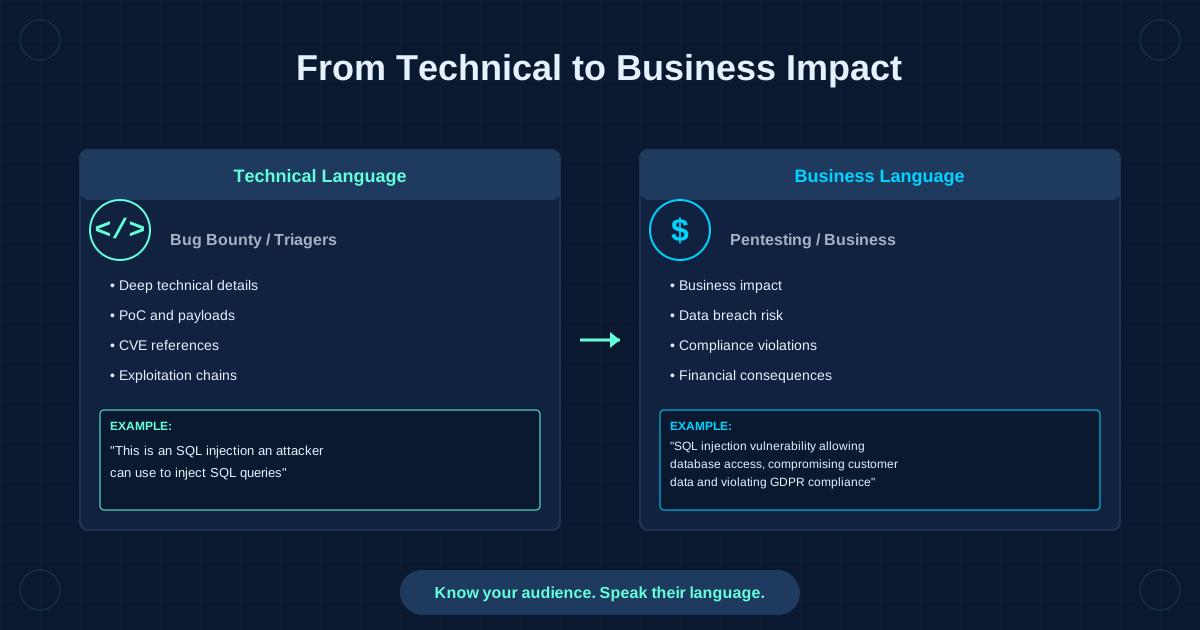
Bug bounty reports go to triagers who have technical knowledge. Well, most of the time. You can go deep into the technical details. Show your PoC. Explain the payload. Reference CVEs. They get it.
Pentesting reports often go to the business. IT managers, developers, sometimes even executives. They don't care about your elegant SQL payload. They care about what breaks and what the business risk is.
Here's the difference in practice.
For the same vulnerability, you can write:
"This is an SQL injection an attacker can use to inject SQL queries."
Or you can write:
"The web application contains an SQL injection vulnerability that allows a malicious actor to access the database, potentially compromising customer data and violating GDPR compliance."
Same vulnerability. Different language. One gets ignored. One gets prioritized.
I learned this the hard way. Early in my career, I wrote technically perfect reports that went nowhere. Detailed exploitation chains. Clean reproduction steps. Everything a researcher would want to see.
They sat in a backlog for months.
Then I started translating technical findings into business impact. Data breach. Regulatory fines. Reputational damage. Suddenly, things got fixed.
Your job isn't just to find bugs. It's to make people understand why they should care.
When you're writing for triagers in bug bounty programs, go technical. They need to understand the exploit, validate your findings and assess severity based on the attack vector. Give them the details they need.
When you're writing for business stakeholders in pentesting engagements, go strategic. What matters to them is the risk, the potential damage and why this matters to the company. Frame your findings so they have enough context to make decisions.
The best pentesters aren't just technically skilled. They're translators. They take complex security issues and turn them into business decisions.
This isn't about dumbing things down. It's about framing impact in terms your audience cares about. Technical teams care about exploitation techniques. Business teams care about consequences.
They both matter, and the skill is knowing which framing to use for which audience.
I've seen brilliant researchers struggle because they couldn't communicate impact effectively. They found critical vulnerabilities that never got fixed because their reports didn't resonate with the people who controlled the budget.
On the flip side, I've seen average findings get immediate attention because they were framed in terms of business risk. The researcher understood who was reading the report and what they needed to hear.
That's the skill that separates good researchers from effective ones.
Know your audience. Speak their language. Get things fixed.
