Bug bounty gets romanticized. Quick payouts, flexible schedule, hunting vulnerabilities from a coffee shop. It looks good on paper, and sometimes it is exactly that. But there's another side that doesn't get talked about enough.
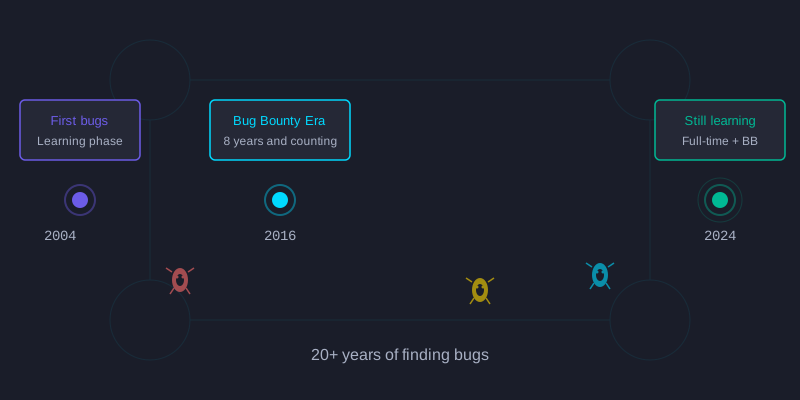
I've been doing this for over eight years officially, and more than twenty if you count the early days before platforms existed. Back when I was twelve, I found vulnerabilities in companies and reported them because I thought it was interesting. There were no bounties. Sometimes you'd get a thank you. Other times, you'd get a lawyer telling you to stop. That was the risk.
I wasn't doing it for money because there was no money to be made. It was just a way to learn. That mindset, more than anything else, is what kept me from burning out over the years.
Bug bounty can wear you down if you approach it the wrong way. Duplicates pile up. Companies dispute your findings. Bounties get reduced after you've already put in the work. These things happen to everyone, and they don't stop happening just because you've been doing this for years.
The difference is in how you frame it. If bug bounty is only about the payout, every duplicate feels like wasted time. Every dispute becomes personal. The grind starts to outweigh the reward.
But if you treat it as a learning platform, the equation changes. Real environments. Real codebases. Real security implementations, both good and bad. You get to see how companies actually build and deploy their systems, and you get paid to learn from their mistakes.
I have a full-time job. Bug bounty is what I do in my spare time. It brings in solid income now, but that wasn't always the case. Early on, it was mostly frustration and the occasional small win. The experience, though, was worth more than the money.
When I decided to switch careers into cybersecurity, I had no formal education in the field. No degree, no certifications, no job experience. What I did have was a track record of finding vulnerabilities in real companies through bug bounty. That was enough to open doors.
Here's what worked for me:
Treat bug bounty as practice, not a job. Especially when you're starting out. The pressure to turn it into income immediately will make you miserable. Let the money come as a byproduct of getting good at finding bugs.
Be patient with the process. You're going to hit walls. Reports will get closed as duplicates. Companies will disagree with your severity ratings. Payouts will be lower than you expected. This is normal. It happens to everyone at every level.
Focus on learning from real environments. Bug bounty gives you access to production systems that you couldn't get anywhere else. Use that access to understand how things break in the wild, not just in controlled lab environments.
Don't make full-time bug bounty your immediate goal. If that's where you end up, great. But setting it as the primary objective right after starting sets you up for disappointment. Build the skills first. The options will follow.
The bugs are still out there. Companies are still building insecure systems. The work hasn't changed much in twenty years, just the scale and the platforms. If you can stay curious and patient through the frustration, there's a lot to learn and a decent living to be made.
Now get back to finding bugs.
